Facts, not Fantasy

Friday, November 05, 2010

Vaccine Central: Analysis of Anti-Vax Graphs

As I mentioned in the previous post from A Photon in the Darkness, item 2 is a particularly dishonest bit of work.  Vaccine Central has delved into this one a bit more, and I think it's well worthwhile to deconstruct this a bit more.

Analysis of Anti-Vax Graphs


READ THE FULL ENTRY AT SOFTWARE 3D.COM

by Robert Webb

The anti-vaccine movement sometimes presents graphs to support their cause, supposedly to show that diseases were on the decline before vaccines came along, and that vaccines had no effect. Graphs seem hard to argue with. They look scientific, represent actual data, and are compelling to many people. And indeed a good graph should be compelling. But their graphs are not good. Let’s have a look at how the true data, which supports the fact that vaccines have had a huge positive effect, can be manipulated to manufacture the conclusion the anti-vax movement wants.

Death rates

Firstly, most of the graphs they show are of death rates, not infection rates. Yes, death rates dropped significantly before vaccines were introduced because other improvements in medicine and sanitation meant that we were better at treating the disease, but it does not indicate that less people had the disease to begin with.

They also tend to show graphs going back a long time to when death rates for common diseases like measles were very high. To fit these high figures on the graph it’s necessary to scale down all the figures, meaning that by the time the vaccine is introduced you can no longer see any drop it may have caused in deaths.
They never show graphs of death rates from third world countries where due to poor sanitation etc. death rates for diseases like measles can still be quite high.

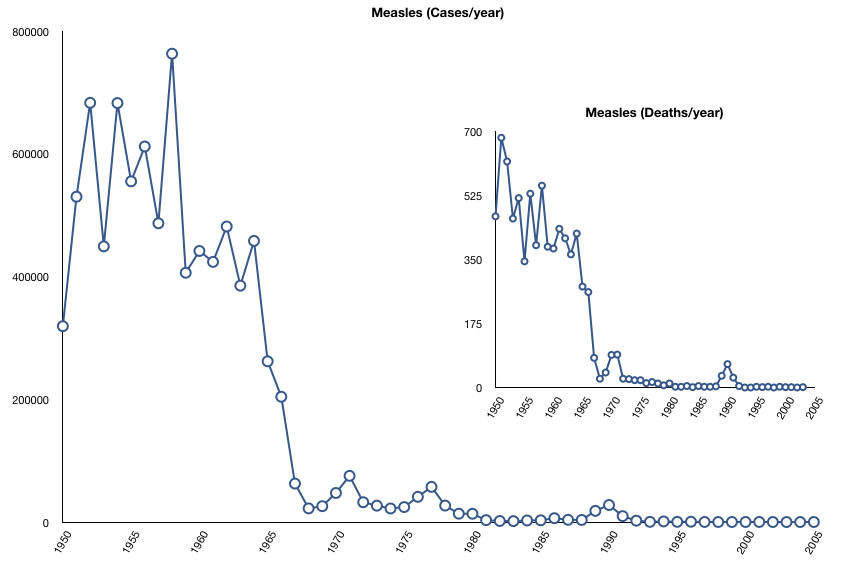
Here’s a nice graph though showing both infection and death rates in the US and it’s clear from both that the 1963 vaccine had a huge effect.

Source: http://www.iayork.com/MysteryRays/2009/09/02/measles-deaths-pre-vaccine/

The anti-vaxxers claim (e.g. here) that death rates are more reliable than infection rates because they don’t trust the diagnoses made by doctors. The idea is that doctors are biased against diagnosing a disease if the patient has been vaccinated against it. But if the symptoms match, why wouldn’t they test for it? We all know that vaccines are not 100% effective. The above graph shows that infection and death rates are very closely matched, year by year, so it seems that the doctors’ diagnoses match the coronors’ reports, so where’s the evidence for this supposed misdiagnosis?

Infection rates

So the best way to see if a vaccine worked is to look at infection rates. I’ve only seen one infection graph presented by the anti-vax side (in several places, but I found it on the AVN website), so let’s look at that in some detail. Here it is:

This graph has already been demolished on Science-Based Medicine, so I’ll try not to repeat too much of that, though I need to recap a little. Mostly what I want to show is some new graphs (the big ones further down) that help explain what Dr. Obomsawin did to create the graph he wanted.

Dr. Obomsawin gives his source for the graph as here:


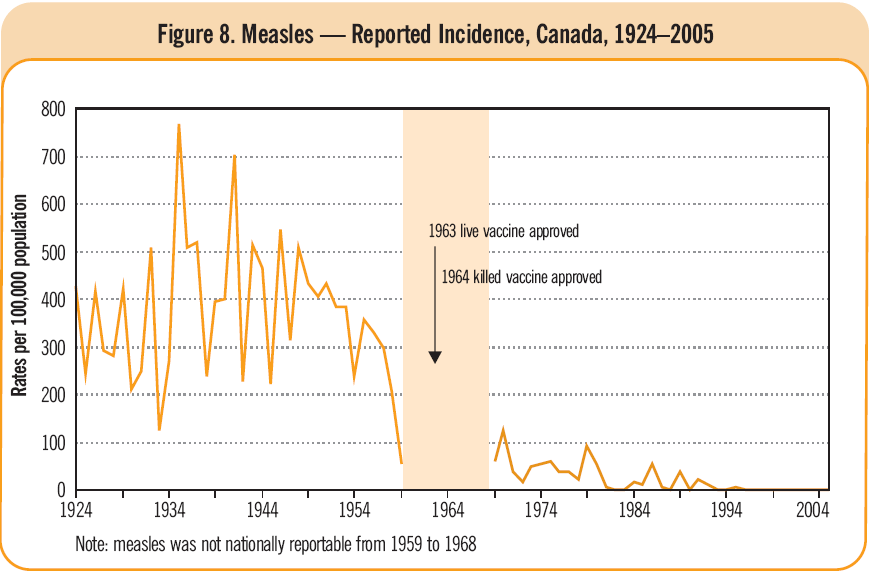
But a better graph of the same data, where actual data points are shown, can be seen in here:

So what’s wrong with the graph?

Here’s some (but not all) of the ways that this graph deceives us.
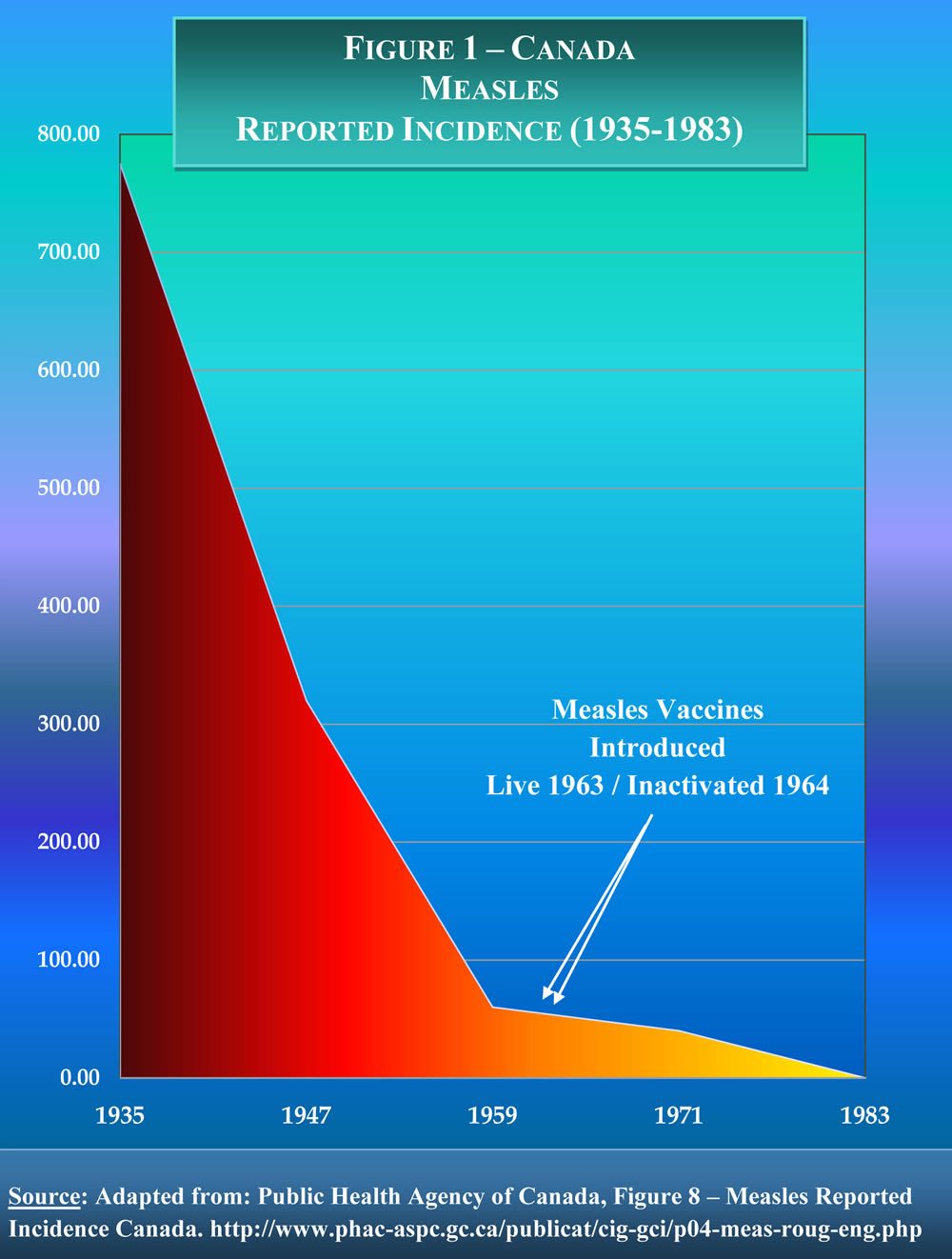
  • First, note the slight difference between these last two graphs. The latter graph shows a different point in 1959, before there was a ten year break in national reporting of measles. It appears to be a glitch in the former graph, showing a data point in 1959 when no data is available for that year. My guess is that the graph was made as if all data points were equally spaced, then the ten year gap was inserted, giving the impression that the graph dips down before the introduction of the vaccine, when in fact the dip should be spread across the gap in reporting where the vaccine was introduced. Dr. Obomsawin’s graph makes good use of this non-existence point. I have recreated his graph over the top of the best version of the original graph:
  • You’ll also notice immediately that his graph looks nothing like the source graph. This is because he has only used a data point every 12 years. So he has taken a graph with 68 data points, and used only 5 of them! When accused of cherry picking the data, he responds:
    • “the data was not selectively “cherry picked”, but rather consistently spaced giving accurate data for every 12th year running from 1935 to 1983, a period which is roughly equivalent to a half century.”
    But cherry picking can still involve evenly-spaced data. Why every 12 years? Why starting at 1935? I’ll show you exactly why this is so important. Simply start at 1933 instead. We’ll even keep Dr. Obomsawin’s arbitrary choice of 12-year spacing. Here’s what you get:
     
  • Yep, it looks completely different, though I’m using exactly the same technique as Dr. Obomsawin to generate this graph from the same original data.
READ THE FULL ENTRY AT SOFTWARE 3D.COM


A Photon in the Darkness: Three Popular Anti-vaccine Myths Deconstructed

I love when people take to task the lies and distortions of the anti-vax pro-disease nutters.  While I don't think these are the most prevalent or the ones that cause parents to willingly subject their children to the dangers of infectious diseases that can kill them, they are the sort of things that anti-vax pro-disease nutters will go on about at length.  So, A Photon in the Darkness deconstructs them (pay attention to point 2, will be posting about that in a second):

Three Popular Anti-vaccine Myths Deconstructed

Anyone who spends any amount of time dealing with autism will eventually (usually within the first 24 hours) run into the mythical “vaccine-autism connection”. I say “mythical” because, much like its cousin the Loch Ness Monster, the “vaccine-autism connection” is much talked about and even widely believed without any solid data supporting its existence.

Since this is “Vaccine Awareness Week“, I thought I’d try an address at least a few of the other myths about vaccines (after several sharp jabs from readers prodding me in that direction).


[1] “You claim that vaccines are 100% safe and effective!”:
It seems that whenever I get into a discussion - face-to-face or virtual - about vaccines, someone will point out that vaccines have risks associated with them. This, strange as it may seem to some people, is not unknown, even among those who generally support the widespread use of vaccines.

Every real medical intervention has risks. I say “real” because there are a number of “non-real” medical interventions that are essentially risk-free (apart from the risk of using them instead of real medical treatment to treat a real illness) - homeopathy being the best example. Apart from the risk of choking, true homeopathic remedies (as opposed to “alternative” medicine remedies that are marketed as homeopathic but have measurable amounts of active ingredients) are about as risk-free an activity as you can engage in on this planet. They aren’t going to help you, but they are exceedingly unlikely to hurt you.

Back to the point, real medical treatments carry real (if usually very small) risks of death or injury. Vaccines are not an exception to this rule. What real medical practitioners look at is the risk-benefit ratio. The risk of death or injury from a vaccine is less - often millions of times less - than the risk from the disease it is produced to prevent. This is actually better than the risk-benefit ratios from most antibiotics, where the risk of serious allergic reaction is often cited as one in ten thousand or so [1].

So, what’s the myth?

The myth - as it is usually stated - is that people who support the widespread use of vaccines, including the use of vaccines in children, are claiming that vaccines are 100% safe. An variation on this them is that supporters claim vaccines are 100% effective.  Neither myth is true, either about the vaccines or the supporters of vaccines.

This myth is a straw man fallacy. The people using it are trying to find an easier position to argue against (one that their “opponent” doesn’t actually support) because trying to refute the actual argument - that vaccines are safer than going unvaccinated - would be hard. “Hard” as in impossible.

 No medical treatment is 100% safe or 100% effective - not one. Anyone who makes that claim is sadly misinformed (or is lying). And anyone who claims that someone else is making that claim had better be prepared to show proof.

[2] ”Vaccine-preventable diseases were in decline before the vaccines were introduced”:
Another popular vaccine myth is that vaccine-preventable diseases were disappearing even before the vaccines were introduced because of improvements in hygiene, nutrition or just about anything except vaccines. I’ve seen this ancient canard trotted out for both polio and measles in recent years. The usual “data” used to support this claim are the mortality figures for the disease in the years preceding introduction of the vaccine.

The key to this myth is the use of mortality data rather than incidence data. Although the myth is that the incidence of the disease was waning prior to the vaccine, the data show something very different: that the number of deaths attributed to the disease were declining.

So, how is this different, you might ask?

Let’s take a look at measles, as an illustration. When you look at a graph of reported measles cases (incidence), you will see a dramatic drop immediately after the vaccine was introduced [2]. Further, if you “scroll back” through the years preceding the vaccine, you’ll see that the number of cases was consistently high. This is only sensible, since measles is highly contagious and, prior to the vaccine, 95+% of the population had it by adulthood.

So, what about the graphs that show the measles mortality gradually drifting downward long before the measles vaccine? Well, most of them seem to be derived from the information presented in a 1975 paper by Engelhardt et al [3]. In this paper, the authors have a graph of measles mortality and measles incidence from 1912 to 1975. It’s figure 1, on page 1167. I’ll wait while you go look at it.

 Back already?

As you look at this graph, there are two things you should note: first, the vertical axis (the “Y” axis) is logarithmic. Second, you should note that while the incidence of measles (the number of cases per 100,000 population) didn’t show any overall decline until after 1963 (hint: the measles vaccine was introduced in 1963), the mortality rate (number of deaths per 100,000 population) was declining by the 1920’s (and possibly earlier).

So, does this mean that the claim that measles was already on the way out long before the vaccine was introduced is correct?

No.

The incidence of measles was unchanged until after the introduction of the vaccine, which shows that whatever advances there had been in hygiene, nutrition, etc. had no impact on the incidence of the disease. However, it does show that something - better hygiene, better nutrition (although that fails to explain the continued decline in mortality during the Great Depression), better medical care, better reporting of measles cases, etc. - gradually decreased the case-fatality rate (number of deaths per case of measles) from over 20 per 1,000 cases in 1912 to less than 1 per 1,000 cases in 1963 (from the graph in figure 1).

Anyone who wants a more in-depth discussion of the impact of the measles vaccine on measles incidence and mortality should check out two now-classic papers by RM Barkin [4][5].

As it turns out, the myth that “better hygiene (etc.) was eliminating measles (et al) before vaccines” is largely based on a classic “bait and switch” - they are claiming that there was a decline in disease incidence but only show data about disease mortality. In fact, while better hygiene, nutrition and whatever were clearly reducing the mortality rate of measles before the vaccine - at a rate of approximately one order of magnitude (factor of ten) in 20 years - the introduction of the measles vaccine reduced the mortality rate by another order of magnitude within five years after it was introduced.

No matter how you slice the numbers, introduction of the measles vaccine had a tremendous effect on measles, even if you only look at mortality. When you look at the actual incidence of measles, there is simply no room for doubt: the vaccine effectively ended measles outbreaks in the US (until a certain British doctor muddied the waters - but that’s a topic for another day).

[3] “The chickenpox vaccine causes shingles!”
[Note: the terminology of human herpes virus 3 infections is a bit confusing, primarily because the primary infection (varicella or "chickenpox") and the secondary infection or reactivation (herpes zoster or "shingles") were thought to be different diseases until 1964. The virus is alternately called varicellovirus, varicella virus, varicella-zoster virus, herpes zoster virus or human herpes virus 3 (HHV-3); I will call it human herpes virus 3 (HHV-3), in keeping with the current semi-standard in virology.]

I most recently saw this myth on Dr. Joseph Mercola’s medical parody website, where he wrote one of the most humourous statements about virology I have seen in a long time:
“Chickenpox and shingles are related. They are caused by similar viruses, both in the herpesvirus family. After you recover from chickenpox, the virus can remain dormant (”asleep”) in your nerve roots for many years, unless it is awakened by some triggering factor such as physical or emotional stress. When awakened, it presents itself as shingles rather than chickenpox.[emphasis added]“
“Chickenpox” (varicella) and “shingles” (herpes zoster) are, in fact, caused by exactly the same virus (human herpes virus 3 or HHV-3). I suppose it could be argued that they would then be, of course, very similar - as similar as my right hand is to my right hand. Although Dr. Mercola is rather ambiguous in his wording, he is correct that after a primary HHV-3 infection (i.e. “chickenpox”), the virus does remain in the cell bodies of the dorsal root ganglia of your spinal cord. What “awakens” (reactivates) this dormant virus - according to available data - is a decline in immunity against the virus, which can be the result of a number of things:
[a] time - without recurrent stimulation, the immunity naturally declines over time.

[b] immune suppression - whether from infection (e.g. HIV, wild-type measles), disease (e.g. lymphoma, leukemia, etc.), medication (e.g. steroids, chemotherapy, etc.) and - yes - even that vague and ill-defined “stress”, immune suppression reduces immunity.

[c] age - the immune system ages along with the rest of the body, even if you are taking “supplements” and eating the right foods and getting proper exercise.

Let’s take a closer look at [a]: time. One of the features of the human immune system (when it is working properly) is that it doesn’t maintain an immune response indefinitely in the absence of continued challenge. This is part of the “check and balance” (or “yin and yang”) nature of the immune system, balancing stimulation and suppression to keep from under- or over-responding to foreign substances.

What we are finding with so-called “life-long immunity” to chickenpox (and measles, mumps etc.) is that at least part of the extended duration of this immunity is the result of periodic re-exposure to the virus. In pre-vaccine days, almost everyone got these diseases as children and those that survived were immune - for life, we originally thought. It turns out that this “life-long” immunity relies on periodic exposure to the virus - a “natural booster”, in effect.

In the days when 90+% of children had chickenpox at some point, there was no shortage of runny noses, uncovered sneezes and aerosolised crusts (from the lesions) to provide a timely inocculum for surrounding adults. However, even in those blissful days before the chickenpox vaccine, a certain percentage of otherwise healthy adults experienced a sufficient decline in their immunity to HHV-3 that they experienced a secondary (or reactivated) infection - known popularly as “shingles”.

The rash in shingles looks just like the chickenpox rash except that it is generally restricted to the distribution of one (sometimes more) sensory nerve root. Unlike the primary infection (”chickenpox”), however, the sensory nerve root is damaged - sometimes permanently. Patients experience this as the burning, stinging pain of shingles or - if they are unlucky - permanent post-herpetic neuralgia. If the nerve involved is the ophthamic branch of the trigeminal nerve, blindness is a very real possibility.

It is the prevention of shingles and post-herpetic neuralgia that make the chickenpox vaccine doubly important. While the mortality and diability rates from HHV-3 primary infection (”chickenpox”) are low (but not as low as the mortality and disability rates from the vaccine), the incidence of post-herpetic neuralgia from the secondary infection (”shingles”) is nearly 6 per 10,000 population per year [6].

Enter the chickenpox vaccine. One of the major differences between the HHV-3 vaccine strain and the wild-type is that the vaccine strain isn’t readily passed from person to person (the wild-type virus is highly contagious, as most parents of older children probably remember). Although some people may be inclined to doubt this, the fact that we are seeing an increase in adult shingles cases [7][8] - as Dr. Mercola correctly notes - is proof that the vaccine strain isn’t passed between people [see note below]. Let me explain why we can say that.

[Note: transmission of the chickenpox vaccine strain from recently vaccinated children to severely immunocompromised patients or from immunocompromised patients to healthy non-immune caregivers has been reported a number of times. However, transmission between immunocompetent people has been detected only rarely and usually in the presence of chronic illness [*] or between young siblings [**][***]. Thanks to Science Mom for pointing out this omission.]

We know that the HHV-3 vaccine strain, when given to older adults (the risk of shingles rises dramatically after age 50 as immunity declines - this was true even before the chickenpox vaccine) reduces the incidence of shingles [9]. We also know - as I mentioned above - that the incidence of shingles is increasing despite near-universal childhood vaccination with the chickenpox vaccine. If the vaccine strain was readily communicable, we wouldn’t see the rise in shingles because adults would be getting their “natural booster” from vaccinated children.

And before Dr. Mercola or some else claims that the rise in shingles cases are due to primary infections of adults with the vaccine strain, remember that the primary infection - with the wild-type HHV-3 or the vaccine strain - causes a generalised (over the whole body) rash, not the limited, dermatomal rash of shingles [Note: the rash is very mild to undetectable with the vaccine strain, although in immunosuppressed patients, the vaccine strain can cause an illness identical to wild-type HHV-3]. We also have evidence that the HHV-3 vaccine strain, when it is reactivated, will not cause the nerve damage that makes shingles (wild-type) so debilitating [10].

So, yes, the chickenpox vaccine is leading to a rise in shingles, but not in the way some people might want you to think. The good news is that the same vaccine that is “causing” the problem (by reducing exposure to wild-type virus - a good thing if you’re immune suppressed) can be used to “cure” it. In addition, if we are diligent about vaccination, it might be possible to eradicate HHV-3 (wild-type) and prevent future generations from having to suffer from shingles and post-herpetic neuralgia.

Summary:
This is just a taste of some of the many myths about vaccines that you can find on the Internet and in your community. If I had the time (and you had the patience), this could have easily been extended to the top three thousand anti-vaccine myths. As always, I encourage people to be skeptical of any sources of information that don’t “show their work”, especially if you agree with them. My references are below, if you want to check my work. I especially recommend [6] for those who are concerned about the chickenpox vaccine.

Prometheus

References:
[1] International Collaborative Study of Severe Anaphylaxis. Risk of anaphylaxis in a hospital population in relation to the use of various drugs: an international study. Pharmacoepidemiol Drug Saf. 2003 Apr-May;12(3):195-202.
[2] Meissner HC, Strebel PM, Orenstein WA. Measles Vaccines and the Potential for Worldwide Eradication of Measles. Pediatrics. 2004 Oct;114(4):1065-1069.
[3] Engelhardt J, et al. Measles Mortality in the United States 1971-1975. Am. J. Public Health. 1980;70(11):1166-1169.
[4] Barkin RM. Measles mortality. Analysis of the primary cause of death. Am. J. Dis. Child. 1975 Mar;129(3):307-9.
[5] Barkin RM. Measles mortality: a retrospective look at the vaccine era. Am. J. Epidemiol. 1975 Oct;102(4):341-9.
[6] Bennett GJ, Watson CP. Herpes zoster and postherpetic neuralgia: past, present and future. Pain Res. Manag. 2009 Jul-Aug;14(4):275-82.
[7] Jardine A, Conaty SJ, Vally H. Herpes zoster in Australia: evidence of increase in incidence in adults attributable to varicella immunization? Epidemiol. Infect. 2010 Aug 23:1-8.
[8] Patel MS, Gebremariam A, Davis MM. Herpes zoster-related hospitalizations and expenditures before and after introduction of the varicella vaccine in the United States. Infect. Control Hosp. Epidemiol. 2008 Dec;29(12):1157-63.
[9] Schmader KE, et al. Effect of a zoster vaccine on herpes zoster-related interference with functional status and health-related quality-of-life measures in older adults. J. Am. Geriatr. Soc. 2010 Sep;58(9):1634-41.
[10] Gutzeit C, et al. Identification of an important immunological difference between virulent varicella-zoster virus and its avirulent vaccine: viral disruption of dendritic cell instruction. J. Immunol. 2010 Jul 1;185(1):488-97.
[*] Grossberg R, et al.  Secondary transmission of varicella vaccine virus in a chronic care facility for children. J. Pediatr. 2006 Jun;148(6):842-4.
[**] Brunell PA, Argaw T. Chickenpox attributable to a vaccine virus contracted from a vaccinee with zoster. Pediatr. 2000;106:e28.
 [***] Otsuka T, et al. Transmission of Varicella Vaccine Virus, Japan. Emerg. Infect. Dis. 2009 Oct;15(10):1702-3.


A Photon in the Darkness: They DID a Study

I wanted to pass a long a few stories that I have seen that I think need to be publicized a bit more.  There is a blog called A Photon in the Darkness that I also follow (along with Vaccine Central and many others) that publishes some good stuff.  He manages to get many more comments in his blog, even though he publishes rather infrequently.  But it bears repeating the information he publishes on other blogs that may not get as much traffic, just on the off chance that someone else may read it and learn from it.

They DID a study!

After years of whinging that nobody was studying the effects of thimerosal on the prevalence of autism, the die-hard members of the “thimerosal-causes-autism” club have finally gotten their wish. A study looking relationship between thimerosal and autism was released today (13 Sept 2010) in the journal Pediatrics:
Price et al. Prenatal and Infant Exposure to Thimerosal From Vaccines and Immunoglobulins and Risk of Autism.
This study, which was conducted at three managed care organisations (MCO’s), compared 256 children with autistic spectrum disorder (ASD) to 752 non-autistic controls who were matched by age, gender and MCO. They also examined a sub-group of autistic children who had a history of regression (”regressive autism”).
All children had to have been in one of the three MCO’s from birth to two years of age and currently be in the MCO. This made it possible to collect all thimerosal exposures from conception to age two years. The children with ASD were all evaluated to ensure that they met the criteria; the control subjects were not examined, but their parents were interviewed to identify (and exclude) any children with developmental abnormalities. The ASD group was further partitioned into two sub-groups: autistic disorder (AD) and autistic spectrum disorder with regression.
ASD was defined as: “ADOS scores that indicated abnormalities in all 3 areas and had ADI-R scores that indicated abnormalities in reciprocal social interactions and either communication or patterns of behavior”. The AD sub-group was defined as: “a subset of ASD children who had higher scores on all 3 areas of the ADOS, had ADI-R scores that indicated abnormalities in all 3 areas, and had onset at younger than 36 months”. ASD with regression was defined as: “the subset of case-children with ASD who reported loss of previously acquired language skills after acquisition”.
Thimerosal exposures were broken into time periods: prenatal, birth to one month, birth to seven months and birth to twenty months.
The authors examined the data using both an unadjusted model and a covariant model. The covariants examined were:
-Child and family characteristics (maternal and paternal age at birth of child, maternal education level, family income, single-parent status, birth order, twin/triplet, breastfeeding duration)
-Maternal exposures during pregnancy (exposure to mercury from fish, from cosmetics or medicines, or from dental fillings.
-Use of tobacco, alcohol, or illegal drugs
-Use of folic acid or valproic acid
-Viral infections
-Child birth conditions (birth weight, Apgar score, birth asphyxia, respiratory distress syndrome, hyperbilirubinemia)
-Early-childhood health conditions (anemia, lead exposure, pica, encephalitis)
-Maternal health care–seeking behavior (Kotelchuck prenatal care index, cholesterol and Papanicolaou test screenings)
For both the unadjusted and covarient models, the odds ratio (OR) for ASD was calculated both for a two standard deviation (2SD) increase in thimerosal exposure and for a 1 microgram per kilogram (μg/kg) increase in thimerosal exposure (1 microgram (μg) in prenatal exposure). The 2SD values were as follows:
“For the measure of prenatal exposure, 2 SDs = 16.34μg. Two SDs of the birth-to-1-month measure is 4.08 = μg/kg. Similarly, 2 SDs of birth-to-7-month and birth-to-20-month exposures are 15.56 μg/kg and 17.82 μg/kg.”
Finally, we come to the results:
“We found no evidence that increasing ethylmercury exposure from TCIs was associated with increased risk of ASD, AD, or ASD with regression. The unadjusted model results showed no significant associations between exposure and risk of ASD or AD.”
“In the covariate adjusted models, we found that an increase in ethylmercury exposure in 2 of the 4 exposure time periods evaluated was associated with decreased risk of each of the 3 ASD outcomes. We are not aware of a biological mechanism that would lead to this result.” [emphasis added]
Let me repeat that - there was no increase in ASD, AD or ASD with regression associated with thimerosal in any of the time periods. In fact, there was a decrease in ASD, AD, and ASD with regression seen with increasing thimerosal exposure in the birth to seven months and birth to twenty months time periods.
For those without a vested interest in keeping the “thimerosal-causes-autism” dead-parrot hypothesis alive, this study is the final nail in the coffin.
For those whose devotion to this long-dead hypothesis cannot be extinguished, not even this study will convince them. Mind you, I doubt that they would be convinced if God wrote in letters of fire six miles high “Thimerosal Does NOT Cause Autism”. Faith, I am told, transcends all doubt - all data, as well, it would appear.
Of course, the “debate” has moved on to more fruitful pastures already; only the truly committed (or truly in need of committment) will still admit they believe thimerosal (or mercury) causes autism. The rest have all moved on to more amorphous, ambiguous and - more importantly - less testable claims of “toxins” or other evil beasties in the vaccines. The most sophisticated of the bunch have even made a virtue of vagueness by claiming “Too many, too soon”. For more on that, see my previous post.
For now, the data are very clear that thimerosal is not associated with autism. The fact that the goalposts have been moved does not alter that fact.

Why ID is NOT Science

As of late, I have put up a lot of information about vaccines (it's that time of year when folks should be getting their flu vaccines, hence my focus on that).  However, this page also talks a lot about evolution.  Now, if you read the evolution page, and the sub menu tabs, you'll see that pretty much every argument they have made up has been addressed.  In the past 150 years, there hasn't really been much new at the root of their arguments.

As an aside, one must wonder, how is it that when the initial idea of descent from common ancestors (i.e. evolution) was proposed, and there were many fields that we had no idea about like genetics, cellular biology, microbiology, taxonomy, etc.  If a 19th century scientist was going to make up something, or try to intentionally deceive the scientific community, how could he possibly have pulled it off?  EVERY SINGLE DISCOVERY in biology and genetics supports evolution.  Read that again.  Every single one!  Even Newton's theory on gravity didn't stand up that well to time and subsequent discoveries.

Anyway, a fellow by the name of Wowbagger, over at the JREF forums, made this post that I really enjoyed, and wanted to share with you all:

There are a few ways to tell who is really doing the science, and who is not.

Progression vs. Reaction
Intelligent Design seems to be almost entirely reactionary. They never seem to be the ones making new, innovative discoveries; nor are they capable of predicting what might be found in a particular study: At least not in any detail.

What often happens is that evolutionary biologists will make a new discovery, of some sort: Perhaps a new fossil or a new way in which genes can vary, or a new way in which genes are expressed. And, all I.D. can do is react: "Yeah, but this can also be explained in this way..." And, that "way" would be very creative and convincing to a great many people. Except: They were not the ones who could ever come up with that discovery. It would be an entirely post-hoc analysis.

For example: As evolutionary development scientists (evo/devo) discover more facts about epigenetics, ID can react by calling them all examples of "front loading". ID is not capable of making the discoveries, nor are they capable of predicting what would be "frontloaded" or not, using their own hypothesis.

Another example is in the Recurrent Laryngeal Nerve (RLN). One would not expect a nerve to take a path like that, if it were designed. But, since we discovered it, all ID can say is "yeah, there is a reason for it". Of course, this is not even an argument against evolution: The nerve could still be the result of evolutionary heritage, and not contradict claims of how it is used. But, at least evolutionary biologists can still map how the nerve got to be that way, over time. ID cannot present evidence of a Creator's desires.

A third example, in the finding of fossils: The careful study of evolution can help us predict where new fossils can be found, such as the Tiktaalik. ID could make all the claims it wants about it "not being a transitional fossil". But, they did not predict its discovery. All they can do is react.

Utility as a Framework
The end result of all this is that Evolution continues to make headway as a framework for solving problems in the field of biology. Its findings, though not perfect nor complete, yet, are still far more reliable than anything Creationists have come up with.

Examples aplenty can be found here:   http://evolution.berkeley.edu/evolibrary/search/topicbrowse2.php?topic_id=47

ID seems to be entirely superfluous: It does not add anything that a scientist, charged with the responsibility of solving a problem in biology, would ever want to incorporate.

Quality of Evidence at the Core
Every claim made by evolutionary biologists (but, not necessarily the strawman claims that creationists claim evolutionists make) is backed by empirical evidence: We can isolate and measure each property at the core of our claims, and then some.
The same cannot be said for ID: There is no testable hypothesis that can isolate and measure the properties of the Designer. Not even in principle, it seems.

ID proponents are content with having the core of their claims be unknowable. But, the nature of the empirical beast that is science demands that claims should strive to be otherwise.

If evolution were all a hoax, then why does it continue to be productive in the fields of biological sciences? If ID was a superior science, then how come it is almost entirely reactionary?

Ask yourself: Who is really conducting science in biology?

Tuesday, October 26, 2010

Vaccine Central: Vaccine Preventable Death – Raymond Plotkin

A lot going on in this story.  I am at least glad that his parents are not anti-vax nutters.  It is sad that there were not enough available vaccines.  It would have done its job of saving this young man's life.  Their whole purpose.

Vaccine Preventable Death – Raymond Plotkin


Age at death - 18 years
Cause of death –H1N1 (Swine Flu)
Vaccination Status – Unvaccinated
What happened – Raymond Plotkin, was a freshman at the University of New Mexico. He was studying to become an engineer. He started class in August 2009 as a freshman interested in Chemical and Nuclear Engineering. He enjoyed his roommates and living in a dorm as part of the Engineering Living Learning Community. In 2009 he had the regular flu shot, but due to shortages of  the vaccine, he wasn’t able to get the H1N1 vaccine.
While Raymond had health issues growing up, he had no problems in the last couple of years, according to family members. Doctors told the family they do not believe underlying health problems contributed to his death
He died on Wednesday evening of  November 11, 2009, four days after being admitted in the hospital. Said Raymond’s mother:
“It was a terrible tragedy. It could have been prevented had there been vaccine,”
“We are strongly recommending that because Raymond couldn’t take his shot last year, that this year everyone, that whether you’re a child, adult, parent, grandparent, we all take one for Raymond,”
People are getting complacent about H1N1. Please remember what happened to Raymond and get both the seasonal flu and H1N1 vaccines as soon as you can.
Raymond’s family has set up a scholarship fund in honor of Raymond’s memory. The first scholarship was awarded to Sean Chavez, a 2010 graduate of Albuquerque High School and computer engineering student at UNM.
For more information about the fund, please contact Susan Georgia, UNM School of Engineering Development Office at 505 – 277-0664; sgeorgia@​unm.​edu.
Contributions can be sent to:
UNM Foundation/Raymond Plotkin Fund
ATTN: Susan Georgia, Development Office
UNM School of Engineering
Centennial Engineering Center
MSCO1 1140
1 University of New Mexico
Albuquerque, New Mexico 87131 – 0001
My deepest condolences to to Raymond’s family. I am very sorry for your loss.
Sources
KVue.com
New Mexico Daily Lobo
The University of New Mexico
Khou.com


Friday, October 22, 2010

CNN: A tiny life lost to whooping cough

Anti-vaxers you rock! You found a way to lower the worlds population! Keep up the awesome work! (In case you don't get it, that is what we call sarcasm. I personally think you should be prosecuted for involuntary manslaughter for each case.)

Seriously though, these stories can go on and on, yet the lies and distortions of the anti-vax pro-disease people are what get the attention.  This is one of the vital reasons that we need science literacy in our educational system.  People just can't tell that they are being lied to, and even manipulated by these liars and charlatans.


Whooping cough is a rather mild-sounding name for a disease that can kill a baby before it’s even diagnosed.

Ten infants in California have died since the first of the year in an outbreak of whooping cough, whose proper medical name is pertussis. Many Americans think of it as a disease of the past, but nearly 6,000 cases in California  and more nationwide suggest otherwise.

Although California has had the highest number of whooping cough cases this year, other states are seeing slight increases. And Michigan has been watching a rise since the second half of 2008, which continues, according to the CDC. By Aug. 15, Michigan had seen 610 pertussis cases, compared with 902 for all of 2009 and 315 cases in 2008.

Daryl and Felicia Dube of Lancaster, South Carolina, became all-too familiar with the disease this year. Their baby son, Carter, came down with pertussis in January.

Whooping cough explained
Carter, just 5 weeks old, developed a low-grade fever one day and was unusually fussy but didn’t show any other obvious symptoms, said Felicia Dube, 35. She called the family’s pediatrician, who told her it was probably nothing serious but had her bring him in that same day to be sure. At the office, the doctor became concerned about the baby’s rapid breathing and called an ambulance to take him to a hospital in Charlotte, North Carolina, about 30 miles away.

Things only got worse at the hospital over the following days as Carter’s eyes rolled around, he grew weak and irritable and he refused to eat. His heart started racing but his blood pressure was puzzlingly low.
Then the coughing started.

“This may sound strange, but the sound of it was like listening to a man, a smoker, cough,” Felicia Dube said.

Listen to what whooping cough sounds like

Carter was coughing so hard that it would make his feet come up in the air. It hurt and made him cry, which made him cough more, his mother said.

When the infant could not catch his breath and turned blue, he was rushed to the pediatric intensive care unit and given a high concentration of oxygen. Test results hadn’t come back yet , but doctors believed he had pertussis and aggressively treated him with antibiotics and sedatives.

“He wasn’t responding to anything,” Dube said.

After several frustrating days as Carter got worse and worse, surgeons hooked him up to a respirator. When that didn’t help, surgeons implanted an extracorporeal membrane

oxygenation (ECMO) machine, which takes over the work of the heart and lungs. Large tubes came out of Carter’s neck, routing his blood through a bedside machine.

“They tried to prepare us for it, but you’re not prepared to see that,” Dube said. “… Once they did that to him, we couldn’t touch him, so I couldn’t hold him.”

WATCH: Why it's important to protect against pertussis

And it wasn’t enough. Nine days after coming down with a 100.1-degree fever, Carter Dube died. Lab tests finally confirmed the pertussis diagnosis two days later.

“They did everything they could for him,” his mother said of the doctors and staff at Levine Children’s Hospital in Charlotte. “They tried. They cried as hard as we did.”

At 5 weeks, Carter was too young to have received his first pertussis vaccination. Because bad weather had kept the family from traveling since he was born, the infection only could have come from the parents, 10-year-old brother, Zach, or the pediatrician’s office, Dube said.

“It’s a horrible guilty feeling as his mother – I’m the one who’s supposed to protect him, and I could have been the one who gave it to him,” she said. “… That’s something you just don’t shake.”
Dube has become an advocate for adult pertussis booster shots to protect babies through what’s known as “cocooning.”

Why are parents skipping vaccines?

“Nobody should have to watch what we watched,” she said.

Vaccine Central: How are new vaccines tested before public use?

As I mentioned in the previous post, I have an article from Vaccine Central that should provide some useful information.  You can also get more information at these locations:

http://www.cdc.gov/vaccinesafety/Vaccine_Monitoring/history.html#2

http://www.ncbi.nlm.nih.gov/pubmed  (Do a search for "vaccines" and "safety" and you'll find lots of articles.)

http://www.who.int/immunization_monitoring/routine/en/ with a follow on at http://www.who.int/vaccine_safety/wer2010_wer8530.pdf

How are new vaccines tested before public use?

It is reasonable to ask how new vaccines are tested  before they are cleared for public use. The National Institute of Allergy and Infectious Diseases explains the various studies that must be done before the new vaccine is approved by the FDA. There are various stages of testing a vaccine must undergo before it is cleared for use. They are as follows.
1) Animal Testing - Firstly, the new vaccine is tested in animals for safety and immunogenicity, meaning that is must be safe and induce enough of an immune response to justify moving on with human trials.

2) Phase I Study – After a promising animal test, the process moves to what is referred to as clinical trials, meaning testing in human subjects. The first step in this process is a Phase I study, which is the first setting in which an experimental vaccine is given to people. The trial, which can last up to 2 years, may enroll between 20 to 100 volunteers. A Phase I study primarily seeks information on safety, particularly looking for any vaccine-related side effects. The study can also provide data on the dose and administration schedule needed to achieve the optimal immune responses.

3) Phase II Study – Once Phase I studies show the experimental vaccine is safe, well tolerated, and appears promising, it can advance into Phase II. These studies, which can last longer than 2 years, enroll between 100 to 300 volunteers. In these studies researchers gather more data on safety and immunogenicity. These studies also test the effects of varying the doses, and are also referred to as dose-ranging studies.

4) Phase III Study - The most promising vaccine candidates move into Phase III, enrolling 10,000 or more people. A Phase III study, which can last up to 4 years, is typically designed to ensure enough data are collected on safety and effectiveness to support a license application to FDA.
An intermediary study, called a Phase IIb study is being considered, as a middle step between the Phase II and the Phase III studies. This study would enroll between 2,000 and 9,000 volunteers. It appears, as of the time of writing, that Phase IIb studies are not a requirement like the others.
Besides the required tests, the FDA may require additional testing and data at any point. Furthermore, the proposed manufacturing facility undergoes a pre-approval inspection during which production of the vaccine as it is in progress is examined in detail. Vaccine approval also requires the provision of adequate product labeling to allow health care providers to understand the vaccine’s proper use, including its potential benefits and risks, to communicate with patients and parents, and to safely deliver the vaccine to the public.
Until a vaccine is given to the general population, all potential adverse events cannot be anticipated. Thus, many vaccines undergo Phase 4 studies-formal studies on a vaccine once it is on the market. Also, the government relies on the Vaccine Adverse Event Reporting System (VAERS) to identify problems after marketing begins. The VAERS system and how it works is discussed further on this website.

Just the Vax: Reply to Faux Noise anti-science

I just found a link to this blog entry over at JREF, and I have to repost it here.  It will tie in with another article from Vaccine Central about the safety of vaccines and how they are tested. Keep in mind, Fox and Friends isn't exactly a bastion of intellectualism, or honesty for that matter, so there is that grain of salt to start with.

Dr. Bob Sears and Fox Friends

On Saturday, 2 October 2010, Dr. Bob Sears appeared on Fox Friends with Fox News Anchor, Alisyn Camerota (AC) .  Ms. Camerota begins the segment with the question:
AC:  Is there a connection between vaccines and autism?  Thousands of families with autistic kids think there is.  But the Centers for Disease Control has always maintained that no research supports a link.  Now one famous paediatrician has written a book about vaccines who charges the government's studies on vaccines is woefully inadequate.
Ms. Camerota introduces Dr. Bob Sears (BS), author of The Vaccine Book, which was published three years ago. 
AC:  The government says they have studied vaccines and they do not cause autism.  But has the government ever studied the amount of vaccines that our children get in 1 sitting?
BS:  That is what me and my colleagues at SafeMinds are a little worried about...there is a CDC report that says that usually simultaneous vaccination has not been completely studied for safety and that's what we're worried about.  Babies get as many as 6 or 7 vaccines altogether...and the CDC is admitting that they aren't always researched that way.  The prime example is the flu vaccine.  They've researched the flu vaccine in great detail when given alone, but the CDC has never researched it when given in conjunction with all the other shots...and that's what we're worried about.
Interestingly, SafeMinds is a notorious anti-vaccine organisation, also known as the 'mercury militia', that maintains that autism is caused by thimerosal, a preservative used in vaccines that contains ethylmercury.  However, mercury toxicity does not resemble autism, and autism rates around the world have been increasing in spite of thimerosal removal from paediatric vaccines and immunoglobulins starting in 1999 in the U.S. and even years earlier in other countries.  SafeMinds rejects any studies that demonstrate that thimerosal does not contribute to neurological disorders, even going so far as to storm off a study team, in a huff, the day the results were announced and not to their liking.

Dr. Bob alludes to some CDC report that states that simultaneous vaccination has not been completely studied for safety yet doesn't provide any further information about this.  However, the CDC information regarding simultaneous vaccination does not support what Dr. Bob claims.  For instance, from the CDC's Vaccine Safety Page:

Is simultaneous vaccination with multiple vaccinations safe? Wouldn't it be safer to separate combination vaccines and spread them out, vaccinating against just one disease at a time?

The available scientific data show that simultaneous vaccination with multiple vaccines has no adverse effect on the normal childhood immune system. A number of studies have been conducted to examine the effects of giving various combinations of vaccines simultaneously. These studies have shown that the recommended vaccines are as effective in combination as they are individually, and that such combinations carry no greater risk for adverse side effects. Consequently, both the Advisory Committee on Immunization Practices and the American Academy of Pediatrics recommended simultaneous administration of all routine childhood vaccines when appropriate. Research is underway to find methods to combine more antigens in a single vaccine injection (for example, MMR and chickenpox). This will provide all the advantages of the individual vaccines, but will require fewer shots.
Another advantage is that combination vaccines result in fewer shots and less discomfort for children. In addition, spreading out the administration of separate vaccines may leave children unnecessarily vulnerable to disease.
Dr. Bob mentions that influenza vaccine has not been tested with the childhood schedule as the 'prime example', when, in fact, it's the only example.  Vaccine safety studies are addressed later.  Ms. Camerota continues:
AC:  Let me show (CDC Infant Vaccine Schedule) our viewers how many different vaccines some children can get in one sitting.  At two months they get five or six, same at four months.  At six months they get tons!  At 12 months they get up to six, at 15 months they get up to six.  Why isn't the CDC looking at these combinations?
BS:  (Nodding in agreement and not providing any corrections to these assertions.)  Well I think the CDC is just assuming that they are safe.  Because there is no real evidence that they causes [sic] any harm...But I would like to see more research on it and I think that parents want to be confident in vaccines.  And as a paediatrician, I give vaccines in my office every day.  But I want to know that these large combinations are safe.  And what I do as a paediatrician, is I spread the vaccines out.  I give no more than two vaccines at a time to any babies in my office.  It takes longer to vaccinate them that way but I think it's a safer way to go.
Here is the CDC Infant Schedule:
There are not 'tons' of vaccines at six months; actually the same at two and four months and as a matter of course, three or four at 12 months and two or three at 15-18 months.  Dr. Bob not only spreads these out but omits some as well, and not necessarily ones that can or should be omitted and not some that should be as delayed as he has them.  He also eschews combination vaccines which reduce the number of jabs and vaccine constituents, while getting infants protected more timely than his recommendations.  Here are his evidence-free justifications for his recommendations:
  • By only giving two vaccines at a time (instead of as many as 6), I decrease the chance of chemical overload from grouping so many vaccines chemicals all together at once. This allows a baby's body to better detoxify the chemicals one or two at a time.
  • I give only 1 aluminum-containing vaccine at a time (instead of the recommended 4). Overloading on this metal can be particularly toxic to the brain (See Resources, page 250 of The Vaccine Book to view the research on this).
  • I give only one live-virus vaccine component at a time to allow the body's immune system to better handle the live viruses in these vaccines.
  • Giving fewer shots at a time may decrease the side effects, in my experience.
  • Giving fewer shots at a time also makes it easier to figure out which vaccine a child is reacting to if a severe reaction occurs.
Since Dr. Paul Offit and Dr. John Snyder have already critiqued Dr. Bob's schedules, I don't feel compelled to reiterate their reviews.  However, it does bear repeating that Dr. Bob's schedules have not been tested for safety and efficacy; he merely assumes that his recommendations are better because he has set up numerous faulty assertions that the CDC schedule is bad.  He cannot say that his schedules are safer because he has never put them through the rigours of testing, namely, do they protect infants from vaccine preventable diseases that they would otherwise not have and do his schedules prevent all of the bogey-man disorders that he claims fully vaccinating do or may cause?  He has done nothing to alleviate the fears and concerns that parents have since his book is rife with dubious studies that only serve to incite parental concerns and fears about vaccinating.

Dr. Sears creates controversy surrounding vaccine excipients where there really isn't any, by either misinterpreting or omitting relevant scientific literature.  It is a shame that Dr. Bob has chosen to pander to anti-vaccine rhetoric, for the premise of his book seemed appropriately timely, however his execution was sophomoric and clearly intended to further his own agenda and biases.  Ms. Camerota continues:
AC:  It's interesting that you say that because the CDC in part says that they have combined all these vaccines because parents have clamoured for that...parents say, we don't want to have to keep bringing our kids in every two months and giving them different shots, let's just get it all over with.  So perhaps they have acquiesced to parents desires but in a dangerous way.
BS:  Right, you know 20, 30 years ago we only gave babies two vaccines at a time with a total of about eight injections throughout their childhood.  Now we give babies six or seven vaccines each time and over 50 injections spread throughout their childhood.  So I think parents would rather go the extra mile and and [sic] spread the vaccines out cause [sic] I think parents feel like their babies are being overloaded.
Thirty years ago, infants and children received five DTP, four OPV and one MMR.  The U.S. also had about 20,000 Haemophilus influenzae b (HIb) cases in children annually with about 1,000 deaths each year and approximately 16,000 cases of hepatitis b infection in children less than 10 years old each year.  Twenty years ago, infants and children received 18 vaccinations with four given at visits for two, four, and six month olds, three or four given at 12 -18 months old and three given from four to six years old.  They were DTP, Hib, Hep B, OPV and MMR.  There had also been a huge resurgence of measles during that time with more than 55,000 cases and at least 259 deaths.

Today, children are receiving about 30 vaccines by six years old and three of those are not injections, 36 if parents diligently vaccinate their children for influenza, which are actually very few,  less than 30% most years.  So it is very difficult to determine how Dr. Bob calculated 50 injections, however, his own recommendation to split MMR up into six as opposed to two injections would get children closer to that.

But onto his argument that vaccines have not been tested together.  I don't know how he can make this statement when a quick and easy review of the literature reveals quite the opposite.  There are numerous studies that examine the safety and efficacy of new vaccines with existing ones, for example:
Hexavac with Hepatitis A
Hexavalent vaccine with Rotateq
DTaP with Hib
PCV-13 with all infant vaccines
MMR and Varicella
PCV-7 with MMR, Hib and Varicella
Pediarix with Hib and Infanrix-hexa
New Hib with all infant vaccines
MMR with Varicella
MMR-V with Hib-HepB
MMR-V with all infant vaccines
Meningococcal-C with Hep B and Pentacel
Pentacel with PCV-7
This is not, by far, an exhaustive list.  Additionally, the Vaccine Adverse Event Reporting System (VAERS) and the Vaccine Safety Datalink (VSD) exist to monitor vaccine safety after licensure.   Dr. Bob promotes himself as a vaccine expert yet continues to omit relevant facts.  There are valid criticisms of vaccines and policy that are supported by the scientific literature but  Dr. Bob chooses to raise the spectre of misinformation that he has the solution for. 
AC:  Certainly if they're educated, I think you're right about that.  We asked the CDC for their response to that fact that you say their research has been woefully inadequate, here is their response to us:
 "Vaccination is the single most important step parents can take to protect their children from life threatening diseases which once killed thousands of children each year.  Scientific data from years and years of research show that vaccines are safe and effective.  Vaccines do not overload the immune system.  Vaccines contain only a tiny fraction of the antigens that babies encounter in their environment every day.  We do know that delaying vaccines puts children at known risk of becoming ill with vaccine-preventable diseases."
- Tom Skinner, CDC Spokesperson, 1 October 2010
BS:  Well I agree with most of that, especially you don't want to delay vaccines for very serious diseases like meningitis or whooping cough.  However I think the CDC's argument about the thousands of germs that we can tolerate every day...I think that's scientifically invalid because I think they are talking about germs that we inhale, or germs that we swallow.  Those germs are exposed to our immune system in a natural way, in our intestines and our respiratory passages, our immune system processes those germs.  But when you inject germs directly into the body you by-pass the immune system completely and internal part, the bloodstream immune system has to see the germs and attack them, it's a very unnatural type of germ exposure.
It appears as though Dr. Bob has attended the 'Jenny McCarthy School of Immunology' .  His statements regarding 'natural' versus vaccine immune responses invoke one of the most erroneous and overused canards of anti-vaccinationists.  I can't quite parse what Dr. Bob is saying because his description of immunity isn't corroborated by anything known about how the immune system works.  How could he possibly explain an immune response to antigens (or germs as he puts it) that are introduced 'directly into our bodies' via cuts or insect vectors?  Is this also 'unnatural'?  He also seems to believe that this 'natural way' is completely infallible and compartmentalised such that pathogens cannot breech this.  So how does he explain the fact that pathogens have adapted to evade our innate immune system and requiring our adaptive immunity (perhaps what he is referring to as 'bloodstream immune system') creating antibodies to rid ourselves of them?

Vaccination does by-pass some front line non-specific immune defences, but certainly don't 'by-pass the immune system completely', for if they did, we wouldn't produce antibodies and immune memory defences against pathogens when we encounter them.  The whole point of vaccination is to 'teach' our immune system how to deal with the real thing, by using parts of bacteria or inactivated or attenuated viruses.  And they work!  Which shouldn't be the case according to Dr. Bob's primer on the immune system.  It takes quite a bit of knowledge on a topic to be able to reduce complex concepts down to a few sound bites.  So Dr. Bob's conjecture about vaccine versus natural immunity is the chasmic difference between dumbing something down and just sounding dumb. 
AC:  The CDC also said that they have done lots of research...it's interesting because they, they CDC has long cited 2 studies done by these Danish researchers that show that mercury in vaccines does not cause autism.  Well now the lead researcher is being investigated.  Why?
BS:  Right, he was kind of double-dipping so to speak.  He was taking money from the CDC to do this research, he was also under salary from the Danish Universities [sic] and that was against his contract and apparently that went against the rules and now, according to Danish newspapers, he has skipped town with 2 million dollars worth of Danish research money and that sort of calls into question the validity of his research.
Let's take a look at those publications first:
Madsen KM, Hviid A, Vestergaard M, Schendel D, Wohlfahrt J, Thorsen P, Olsen J, Melbye M. A population-based study of measles, mumps, and rubella vaccination and autism. N Engl J Med. 2002 Nov 7;347(19):1477-82.

Madsen KM, Lauritsen MB, Pedersen CB, Thorsen P, Plesner AM, Andersen PH, Mortensen PB. Thimerosal and the occurrence of autism: negative ecological evidence from Danish population-based data. Pediatrics. 2003 Sep;112(3 Pt 1):604-6.

Notice the dates of publication and the order of the authors.  Ms. Camerota and Dr. Bob have referred to the lead author which is Dr. Madsen for both, well he isn't the author in question.  That would be Dr. Poul Thorsen, the sixth and fourth author, respectively.  Respectful Insolence has explained this relevance in great detail, but an author that far down on the list has not made a very significant contribution.  In fact, Dr.s Madsen and Melbye, the senior authors of the studies released a statement to the Philadelphia Inquirer several months ago regarding Dr. Thorsen's involvement:
"Poul Thorsen had absolutely no influence on the conclusions regarding this paper," wrote Mads Melbye, head of the division of epidemiology at the Statens Serum Institut in Copenhagen and senior author of the study, in response to e-mailed questions.
"Thorsen was not actively involved in the analysis and interpretation of the results of this paper," Melbye said.
The second study, published in Pediatrics in 2003, examined 956 Danish children diagnosed with autism from 1971 to 2000. It concluded the incidence of autism increased in Denmark after thimerosal was removed from vaccines.
Kreesten Meldgaard Madsen, the lead author, said Thorsen played a minor role.
"Dr. Thorsen was not in a position to change or compromise the data," Madsen wrote. "Dr. Thorsen was part of the review cycle, but never very active in giving input. Dr. Thorsen never had access to the raw data nor the analysis of the data."
As for the dates, the studies were published in 2002 and 2003 but Dr. Thorsen's resignation under dubious circumstances did not occur until March, 2009.  Furthermore, the grant money in question was not part of the 2 studies in question at all, but rather part of a cooperative between the US National Center for Birth Defects and Developmental Disabilities,CDC and Odense and Aarhus Universities.  And absolutely nothing at all questionable about that; it was the discovery of forged documents by (allegedly) Dr. Thorsen that may constitute fraud.  Apparently, Dr. Thorsen held a full-time post at Emory University, Georgia, USA while still employed by Aarhus University in Copenhagen, Denmark and that is what comprised of his 'double-dipping', not a grant from the CDC as Dr. Bob stated.  Dr. Thorsen is not missing as he continues to publish studies.  We don't know what the funding irregularity was but we do know it has nothing to do with the 2002 and 2003 studies and we do know that Dr. Thorsen's involvement with those studies is being inflated to extremes for the purpose of disparaging them.  It is as though Dr. Bob read the Huffington Post and Age of Autism, didn't bother to ask himself if it made sense, didn't do a little fact-checking and merely parroted extremely questionable sources. 

But Dr. Bob acts as though these 2 studies were the lynch pins for  exonerating vaccines in the role of autism.  Even if we were to dismiss these studies, Dr. Bob completely ignores the numerous other studies by other investigators, in numerous countries that replicate Madsen et al.'s research and then some.  A hat tip to Chris (comment #63) for putting this list together (I have added some recent studies):

Lack of Association between Measles Virus Vaccine and Autism with Enteropathy: A Case-Control Study.
Hornig M et al.
PLoS ONE 2008; 3(9): e3140 doi:10.1371/journal.pone.0003140
*Subjects: 25 children with autism and GI disturbances and 13 children with GI disturbances alone (controls)

Measles Vaccination and Antibody Response in Autism Spectrum Disorders.
Baird G et al.
Arch Dis Child 2008; 93(10):832-7.
Subjects: 98 vaccinated children aged 10-12 years in the UK with autism spectrum disorder (ASD); two control groups of similar age: 52 children with special educational needs but no ASD and 90 children in the typically developing group

MMR-Vaccine and Regression in Autism Spectrum Disorders: Negative Results Presented from Japan.
Uchiyama T et al.
J Autism Dev Disord 2007; 37(2):210-7
*Subjects: 904 children with autism spectrum disorder
(Note: MMR was used in Japan only between 1989 and 1993.)

No Evidence of Persisting Measles Virus in Peripheral Blood Mononuclear Cells from Children with Autism Spectrum Disorder.
D’Souza Y et al.
Pediatrics 2006; 118(4):1664-75
*Subjects: 54 children with autism spectrum disorder and 34 developmentally normal children

Immunizations and Autism: A Review of the Literature.
Doja A, Roberts W.
Can J Neurol Sci. 2006; 33(4):341-6
*Literature review

Pervasive Developmental Disorders in Montreal, Quebec, Canada: Prevalence and Links with Immunizations.
Fombonne E et al.
Pediatrics. 2006;118(1):e139-50
*Subjects: 27,749 children born from 1987 to 1998 attending 55 schools

Relationship between MMR Vaccine and Autism.
Klein KC, Diehl EB.
Ann Pharmacother. 2004; 38(7-8):1297-300
*Literature review of 10 studies

Immunization Safety Review: Vaccines and Autism. Institute of Medicine.
The National Academies Press: 2004
(www.nap.edu/books/030909237X/html) *Literature review

MMR Vaccination and Pervasive Developmental Disorders: A Case-Control Study.
Smeeth L et al.
Lancet 2004; 364(9438):963-9
*Subjects: 1294 cases and 4469 controls

Age at First Measles-Mumps-Rubella Vaccination in Children with Autism and School-Matched Control Subjects: A Population-Based Study in Metropolitan Atlanta.
DeStefano F et al. Pediatrics 2004; 113(2): 259-66
*Subjects: 624 children with autism and 1,824 controls

Prevalence of Autism and Parentally Reported Triggers in a North East London Population.
Lingam R et al.
Arch Dis Child 2003; 88(8):666-70
*Subjects: 567 children with autistic spectrum disorder

Neurologic Disorders after Measles-Mumps-Rubella Vaccination.
Makela A et al.
Pediatrics 2002; 110:957-63
*Subjects: 535,544 children vaccinated between November 1982 and June 1986 in Finland

A Population-Based Study of Measles, Mumps, and Rubella Vaccination and Autism.
Madsen KM et al.
N Engl J Med 2002; 347(19):1477-82
*Subjects: All 537,303 children born 1/91–12/98 in Denmark

Relation of Childhood Gastrointestinal Disorders to Autism: Nested Case Control Study Using Data from the UK General Practice Research Database.
Black C et al.
BMJ 2002; 325:419-21
*Subjects: 96 children diagnosed with autism and 449 controls

Measles, Mumps, and Rubella Vaccination and Bowel Problems or Developmental Regression in Children with Autism: Population Study.
Taylor B et al.
BMJ 2002; 324(7334):393-6
*Subjects: 278 children with core autism and 195 with atypical autism

No Evidence for a New Variant of Measles-Mumps-Rubella-Induced Autism.
Fombonne E et al.
Pediatrics 2001;108(4):E58
*Subjects: 262 autistic children (pre- and post-MMR samples)

Measles-Mumps-Rubella and Other Measles-Containing Vaccines Do Not Increase the Risk for Inflammatory Bowel Disease: A Case-Control Study from the Vaccine Safety Datalink Project.
Davis RL et al.
Arch Pediatr Adolesc Med 2001;155(3):354-9
*Subjects: 155 persons with IBD with up to 5 controls each

Time Trends in Autism and in MMR Immunization Coverage in California.
Dales L et al.
JAMA 2001; 285(9):1183-5
*Subjects: Children born in 1980-94 who were enrolled in California kindergartens (survey samples of 600–1,900 children each year)

Mumps, Measles, and Rubella Vaccine and the Incidence of Autism Recorded by General Practitioners: A Time Trend Analysis.
Kaye JA et al.
BMJ 2001; 322:460-63
*Subjects: 305 children with autism

Further Evidence of the Absence of Measles Virus Genome Sequence in Full Thickness Intestinal Specimens from Patients with Crohn’s Disease.
Afzal MA, et al.
J Med Virol 2000; 62(3):377-82
*Subjects: Specimens from patients with Crohn’s disease

Autism and Measles, Mumps, and Rubella Vaccine: No Epidemiological Evidence for a Causal Association.
Taylor B et al.
Lancet 1999;353 (9169):2026-9
*Subjects: 498 children with autism

Absence of Detectable Measles Virus Genome Sequence in Inflammatory Bowel Disease Tissues and Peripheral Blood Lymphocytes.
Afzal MA et al.
J Med Virol 1998; 55(3):243-9
*Subjects: 93 colonoscopic biopsies and 31 peripheral blood lymphocyte preparations

No Evidence for Measles, Mumps, and Rubella Vaccine-Associated Inflammatory Bowel Disease or Autism in a 14-year Prospective Study.
Peltola H et al.
Lancet 1998; 351:1327-8
*Subjects: 3,000,000 doses of MMR vaccine

Exposure to Measles in Utero and Crohn’s Disease: Danish Register Study.
Nielsen LL et al.
BMJ 1998; 316(7126):196-7
*Subjects: 472 women with measles

Immunocytochemical Evidence of Listeria, Escherichia coli, and Streptococcus Antigens in Crohn’s Disease.
Liu Y et al.
Gastroenterology 1995; 108(5):1396-1404
*Subjects: Intestines and mesenteric lymph node specimens from 21 persons from families with a high frequency of Crohn’s disease

Neuropsychological Performance 10 years after Immunization in Infancy with Thimerosal-Containing Vaccines
Tozzi AE, Bisiacchi P, Tarantino V, De Mei B, D'Elia L, Chiarotti F, Salmaso S.
Pediatrics, February 2009, Vol. 123(2):475-82

Mercury Levels in Newborns and Infants after Receipt of Thimerosal-Containing Vaccines
Pichichero ME, Gentile A, Giglio N, et al
Pediatrics, February 2008; 121(2) e208-214

Mercury, Vaccines, And Autism: One Controversy, Three Histories
Baker JP
American Journal of Public Health, February 2008;98(2): 244-253

Continuing Increases in Autism Reported to California's Developmental Services System: Mercury in Retrograde
Schechter R, Grether JK
Arch Gen Psychiatry, January 2008; 65(1):19-24

Early Thimerosal Exposure and Neuropsychological Outcomes at 7 to 10 Years
Thompson WW, Price C, Goodson B, et al; Vaccine Safety Datalink Team
N Engl J Med, Sep 27, 2007; 357(13):1281-1292

Pervasive Developmental Disorders in Montreal, Quebec, Canada: Prevalence and Links with Immunizations
Fombonne E, Zakarian R, Bennett A, Meng L, McLean-Heywood D
Pediatrics, July 2006, Vol. 118(1):e139-e150

Vaccine Adverse Event Reporting System Reporting Source: A Possible Source of Bias in Longitudinal Studies
Goodman MJ, Nordin J
Pediatrics, February 2006, Vol. 117(2):387-390

MMR-Vaccine and Regression in Autism Spectrum Disorders: Negative Results Presented from Japan
Authors: Uchiyama T, Kurosawa M, Inaba Y
Source: J Autism Dev Disord, February 2007; 37(2):210-217

No effect of MMR withdrawal on the incidence of autism: a total population study.
Honda H, Shimizu Y, Rutter M.
J Child Psychol Psychiatry. 2005 Jun;46(6):572-9.

Thimerosal in Vaccines: Balancing the Risk of Adverse Effects with the Risk of Vaccine-Preventable Disease
Bigham M, Copes R
Drug Safety, 2005, Vol. 28(2):89-101

Comparison of Blood and Brain Mercury Levels in Infant Monkeys Exposed to Methylmercury or Vaccines Containing Thimerosal
Burbacher TM, Shen DD, Liberato N, Grant KS, Cernichiari E, Clarkson T
National Institute of Environmental Health Sciences, April 21, 2005

Thimerosal Exposure in Infants and Developmental Disorders: A Prospective Cohort Study in the United Kingdom Does Not Support a Causal Association
Heron J, Golding J, ALSPAC Study Team
Pediatrics, September 2004, Vol. 114(3):577-583

Thimerosal Exposure in Infants and Developmental Disorders: A Retrospective Cohort Study in the United Kingdom Does Not Support a Causal Association
Andrews N, Miller E, Grant A, Stowe J, Osborne V, Taylor B
Pediatrics, September 2004, Vol. 114(3):584-591

Thimerosal-Containing Vaccines and Autistic Spectrum Disorder: A Critical Review of Published Original Data
Parker SK, Schwartz B, Todd J, Pickering LK
Pediatrics, September 2004, Vol. 114(3):793-804

The Evidence for the Safety of Thimerosal in Newborn and Infant Vaccines
Clements CJ
Vaccine, May 7, 2004, Vol. 22(15-16):1854-1861

Safety of Thimerosal-Containing Vaccines: A Two-Phased Study of Computerized Health Maintenance Organization Databases
Verstraeten T, Davis RL, DeStefano F, et al
Pediatrics, November 2003, Vol. 112(5):1039-1048

The Toxicology of Mercury--Current Exposures and Clinical Manifestations
Clarkson TW, Magos L, Myers GJ
New England Journal of Medicine, October 30, 2003, Vol. 349(18):1731-7

Association Between Thimerosal-Containing Vaccine and Autism
Hviid A, Stellfeld M, Wohlfahrt J, Melbye M
Journal of the American Medical Association, October 1, 2003, Vol. 290(13):1763-6

Thimerosal and the Occurrence of Autism: Negative Ecological Evidence from Danish Population-Based Data
Madsen KM, Lauritsen MB, Pedersen CB, et al
Pediatrics, Sept. 2003, Vol. 112(3 Pt 1):604-606

Autism and Thimerosal-Containing Vaccines. Lack of Consistent Evidence for an Association
Stehr-Green P, Tull P, Stellfeld M, Mortenson PB, Simpson D
American Journal of Preventive Medicine, August 2003, Vol. 25(2):101-6

Impact of the Thimerosal Controversy on Hepatitis B Vaccine Coverage of Infants Born to Women of Unknown Hepatitis B Surface Antigen Status in Michigan
Biroscak BJ, Fiore AE, Fasano N, Fineis P, Collins MP, Stoltman G
Pediatrics, June 2003, Vol. 111(6):e645-9

Vaccine Safety Policy Analysis in Three European Countries: The Case of Thimerosal
Freed GL, Andreae MC, Cowan AE, et al
Health Policy, December 2002, Vol. 62(3):291-307

Mercury Concentrations and Metabolism in Infants Receiving Vaccines Containing Thimerosal: A Descriptive Study
Pichichero ME, Cernichiari E, Lopreiato J, Treanor J
The Lancet, November 30, 2002, Vol. 360:1737-1741

An Assessment of Thimerosal Use in Childhood Vaccines
Ball LK, Ball R, Pratt RD
Pediatrics, May 2001, Vol. 107(5):1147-1154

Prenatal and Infant Exposure to Thimerosal From Vaccines and Immunoglobulins and Risk of Autism
Price CS, Thompson WW, Goodson B, Weintraub ES, Croen LA, Hinrichsen VL, Marcy M, Robertson A, Eriksen E, Lewis E, Bernal P, Shay D, Davis RL, DeStefano F Pediatrics, October, 2010, Vol. 126(4): 656-664

On-time Vaccine Receipt in the First Year Does Not Adversely Affect Neuropsychological Outcomes
Smith MJ and Woods CR
Pediatrics, June, 2010, Vol. 125 (6):1134-1141

This is, obviously, a lot of reading to do but considering the totality of evidence it is the responsible tact to take when advising the public about vaccine issues.  There are concerns and criticisms regarding the CDC vaccine schedule, but they are rather mundane when compared to the misleading and downright false conjectures that self-proclaimed experts would have us believe.  There seems to be an anti-intellectual movement afoot but with the taskmasters absurdly co-opting the esteem of education and credentials to propagate it.

It is encouraging to see that this interview was done by Fox News since they are renowned for their unapologetic biases and don't even bother to offer up any pretence of presenting a fair balance of issues.  An appearance on Fox News is akin to has-been and never-were celebrities breathing their last gasp on Dancing With the Stars.  It signifies the downward spiral of the anti-intellectual, anti-vaccine movement.  And that is a good thing.

Addendum (16 October 2010):  Rahul K. Parikh, M.D. has weighed in on Dr. Bob Sears' Vaccine Book and appearance on Fox News.
Thursday, October 21, 2010

Vaccine Central: Flu vaccine safe to administer to those with egg allergies

The excuses for not getting your flu vaccine are getting fewer and fewer.  Just get the shot, and prevent suffering for yourself and those around you!

Flu vaccine safe to administer to those with egg allergies

New guidelines by the American Academy of Allergy Asthma & Immunology say that individuals with egg allergies can safely receive the flu vaccine, without a skin test being performed first. Flu vaccines are grown in chicken eggs, which raised concerns about possible allergic reactions to residual egg protein. Up to now, precautionary steps were taken, which included vaccine skin testing, administration via a 2-step graded dose challenging (10%, followed by 90% of the age appropriate dose after a brief observation period), or stepwise desensitization.
This latest AAAAI paper  ”offers guidance in how to evaluate and treat the patient with egg allergy who desires influenza vaccination, and outlines the latest evidence based approaches to successfully administer the vaccine.” According to the position paper:
Conclusion There has been tremendous growth over the past year in demonstrating that TIV (and H1N1) are safe for egg allergic individuals to receive. While a few concepts bear further study, such as the safety of these vaccines in individuals with severe allergy to egg, it appears that most egg allergic patients can safely receive influenza vaccination if desired. While no particular approach to administering the vaccine has been shown to be the safest and most effective, several methods for providing this service exist. Providers should no longer withhold the vaccine on account of a patient’s egg allergy, and should feel comfortable selecting one of two strategies we outline for administering the influenza

Vaccine Central: Whooping cough claims 10th baby in California

Yet another dead baby, and still not a peep from the anti-vax pro-disease nutters regarding their lies and distortions that are responsible...

Whooping cough claims 10th baby in California

The bad news keep on coming; the 10th baby, yet another 6-week-old,  has succumbed to the whooping cough outbreak in California. All the babies who have died this year were too young to be fully immunized, so health officials are urging parents and caretakers to get booster shots to create a cocoon of immunity around vulnerable children. Our hearts and thoughts go to the families of these 10 innocent infants during these tragic times in their lives. We are very sorry for your loss.